What Is a Kasbah? Famous Kasbahs, Entrance Fees & Tours in Morocco
A kasbah is one of the most recognizable forms of traditional architecture in southern Morocco. Made largely from earth-based materials such as mud, clay, straw, and sometimes stone, kasbahs were designed not only as homes but also as fortified places of protection and authority.
Table of What Is a Kasbah
When travelers drive south from Marrakech toward Ouarzazate, the Dades Valley, the Draa Valley, Zagora, or Merzouga, they begin to see the landscapes that made kasbah architecture possible: dry valleys, palm oases, mountain passes, and historic caravan routes.
Morocco’s National Tourist Office describes a kasbah as a fortified structure built from materials including earth and straw, traditionally associated with the south of Morocco and with residences of local leaders.
For travelers planning Morocco desert tours, visiting a kasbah is more than taking photographs of an old clay building. These structures help explain how people lived, traded, governed, stored food, and protected their communities before modern roads and infrastructure transformed southern Morocco.
One of the most important distinctions is between a kasbah and a ksar. A kasbah is commonly used for a fortified residence or citadel, while a ksar is a fortified settlement made up of multiple houses and communal structures. UNESCO describes Aït-Ben-Haddou specifically as a ksar, consisting of earthen buildings enclosed by defensive walls and reinforced with corner towers.
This guide explains what a kasbah is, how these buildings were constructed, which kasbahs are worth visiting, current approximate entrance fees, and how to include them in a Morocco desert tour.
What Does Kasbah Mean?
The word kasbah comes from the Arabic qasaba, generally associated with a fortified place or citadel.
In Morocco, the word is widely used for traditional fortified residences, especially in the south. These buildings could belong to powerful families, local chiefs, governors, merchants, or other influential figures.
A traditional kasbah might contain several rooms arranged around courtyards, along with storage spaces, living quarters, defensive features, towers, and sometimes agricultural or commercial areas.
The design depended heavily on local conditions.
Thick earthen walls helped reduce the effect of extreme outdoor temperatures. Small openings limited direct sunlight and strengthened the defensive character of the structure, while decorated facades and geometric patterns gave important buildings a distinctive appearance.
Kasbah vs Ksar: What Is the Difference?
This is one of the most common questions visitors ask.
A kasbah is usually a fortified residence, mansion, stronghold, or citadel associated with one family or a ruling authority.
A ksar is generally a fortified village or settlement containing multiple homes and communal areas.
Morocco’s National Tourist Office describes a ksar as a walled fortified village that can contain several kasbahs, homes, and communal spaces.
That means Aït Ben-Haddou is technically a ksar, although it is frequently called a kasbah in travel articles, tour descriptions, and everyday tourism language.
For SEO and visitor clarity, it is useful to understand both terms because travelers searching for “Morocco kasbahs” will often encounter both kasbahs and ksours along the same routes.
How Were Moroccan Kasbahs Built?
Earth, Straw and Traditional Pisé
One reason Moroccan kasbahs are so visually distinctive is the material used to build them.
Traditional southern Moroccan architecture often relies on rammed earth, known as pisé, as well as adobe-style earthen construction. Earth could be combined with straw and other natural materials before being shaped into walls.
The technique was practical because local construction materials were available without transporting heavy manufactured products over long distances.
The result was a warm, earthy architecture that blends naturally into the landscape.
Thick Walls for a Harsh Climate
The thick walls of a traditional kasbah had practical purposes.
During hot weather, substantial earthen walls could help slow the transfer of heat into interior rooms. At night, the structure could gradually release stored warmth as outside temperatures dropped.
This made the architecture particularly suited to the dry environments of southern Morocco.
Decorative Towers and Geometric Patterns
Protection was not the only concern.
Kasbah facades can feature geometric designs, decorative brickwork, crenellations, projecting towers, carved doors, and carefully finished reception rooms.
In the best-known examples, practical defensive construction and artistic craftsmanship work together.
This is one reason photographers and architecture enthusiasts are especially drawn to southern Morocco.
Why Are There So Many Kasbahs in Southern Morocco?
Southern Morocco historically formed part of important trade and travel networks crossing North Africa.
Caravan routes connected communities across the Sahara and linked inland settlements with major cities to the north and west.
Oases were particularly valuable because they offered water, agriculture, shelter, and opportunities for trade.
Fortified settlements and residences helped local communities manage life in these environments.
The Kasbah Road, especially through Ouarzazate, Skoura, the Dades and Draa valleys, includes large numbers of traditional earthen structures. Morocco’s National Tourist Office actively promotes routes through this southern landscape, including the “Road to the Kasbahs” and excursions through the Dades and Draa valleys.
For visitors, this means a kasbah should not necessarily be understood as one isolated tourist attraction. It is part of a much broader architectural landscape.
Famous Kasbahs and Ksours to Visit in Morocco
1. Aït Ben-Haddou
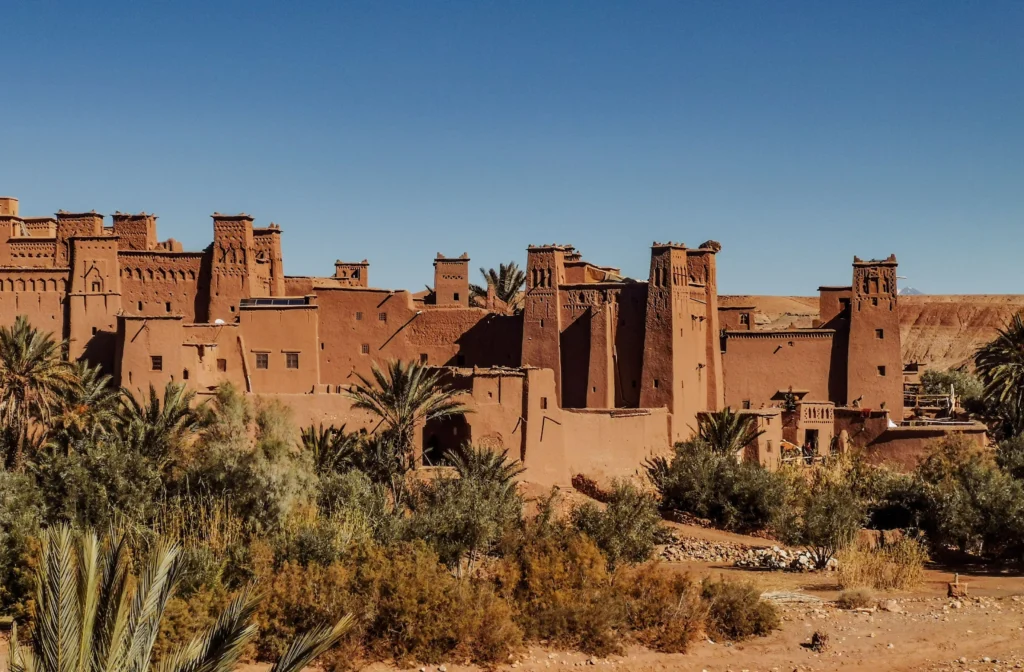
The Most Famous Earthen Ksar in Morocco
Aït Ben-Haddou is probably the most recognizable fortified earthen settlement in Morocco.
Located in Ouarzazate Province on the southern side of the High Atlas, it consists of a group of earthen buildings surrounded by defensive walls and reinforced by towers.
UNESCO inscribed the Ksar of Aït-Ben-Haddou on the World Heritage List in 1987, identifying it as a striking example of southern Moroccan architecture and a traditional pre-Saharan settlement.
Despite frequently being described as a “kasbah,” its formal designation is ksar.
Aït Ben-Haddou Entrance Fee
This is an important point because online information is inconsistent.
Current local visitor information indicates that walking through the ksar itself can be free, with access available through public routes. Some private houses, museums, and exhibition spaces inside or around the site charge their own admission fees.
Some current travel sources report small charges of around 10–20 MAD for optional private-house or exhibition visits.
Therefore, travelers should ask exactly what a payment covers rather than assuming that every requested fee is an official entrance ticket.
General ksar access: Free via public routes
Optional house/museum visits: Often around 10–20 MAD
Local guide: Commonly arranged separately
How Long Should You Spend There?
Allow at least 1–2 hours to explore the main settlement. Travelers who want to visit private homes, climb higher, take photographs, or explore nearby attractions can comfortably spend longer. Current visitor guidance suggests approximately two to three hours for a deeper visit.
2. Kasbah Taourirt in Ouarzazate
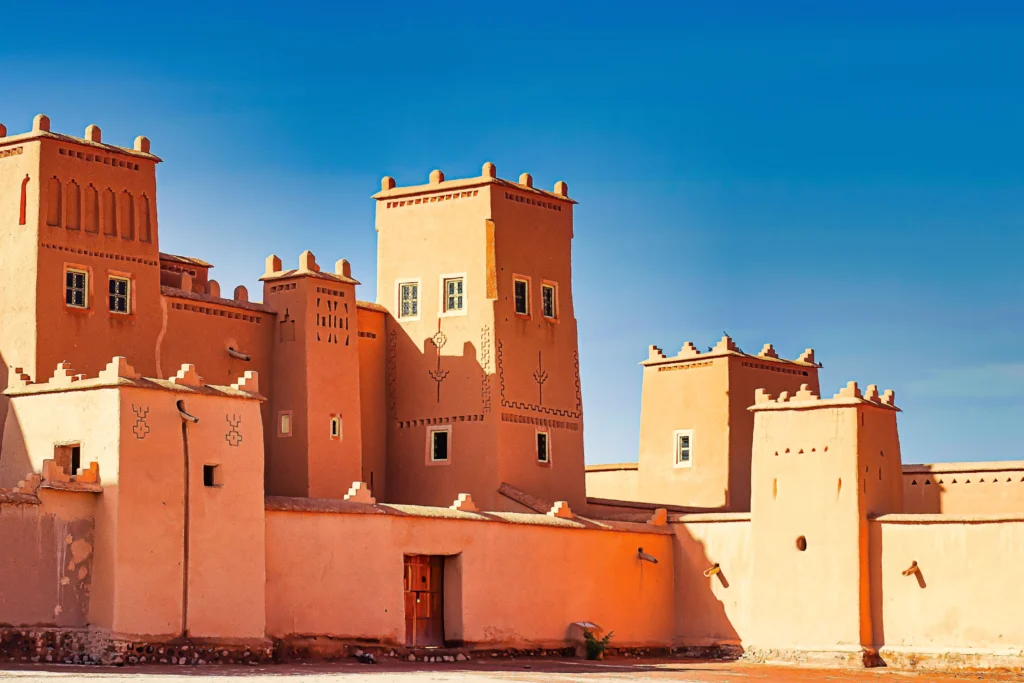
A Historic Glaoui Stronghold
In central Ouarzazate stands Kasbah Taourirt, one of the city’s best-known monuments.
The Moroccan National Tourist Office highlights Taourirt as a major historical attraction and describes it as an imposing earthen fortress associated with the Glaoui family.
Its exterior looks almost like a giant earthen castle, while the interior reveals a much more complex arrangement of rooms, courtyards, passageways, and decorated spaces.
What Makes Taourirt Special?
The appeal is partly architectural and partly historical.
Unlike simply photographing an exterior wall, entering Taourirt lets visitors understand how the interior organization of a large kasbah worked.
Some sections feature decorative ceilings, stucco details, geometric motifs, and traditional craftsmanship.
Kasbah Taourirt Entrance Fee
Current 2026 visitor information commonly lists admission at around 20 MAD, although some sources report slightly different rates, so confirming the price on arrival is sensible.
Approximate entrance: 20 MAD
Suggested visit: 45–60 minutes
Taourirt is particularly convenient for people traveling through Ouarzazate because it is located within the city rather than requiring a major detour.
3. Kasbah Amridil in Skoura
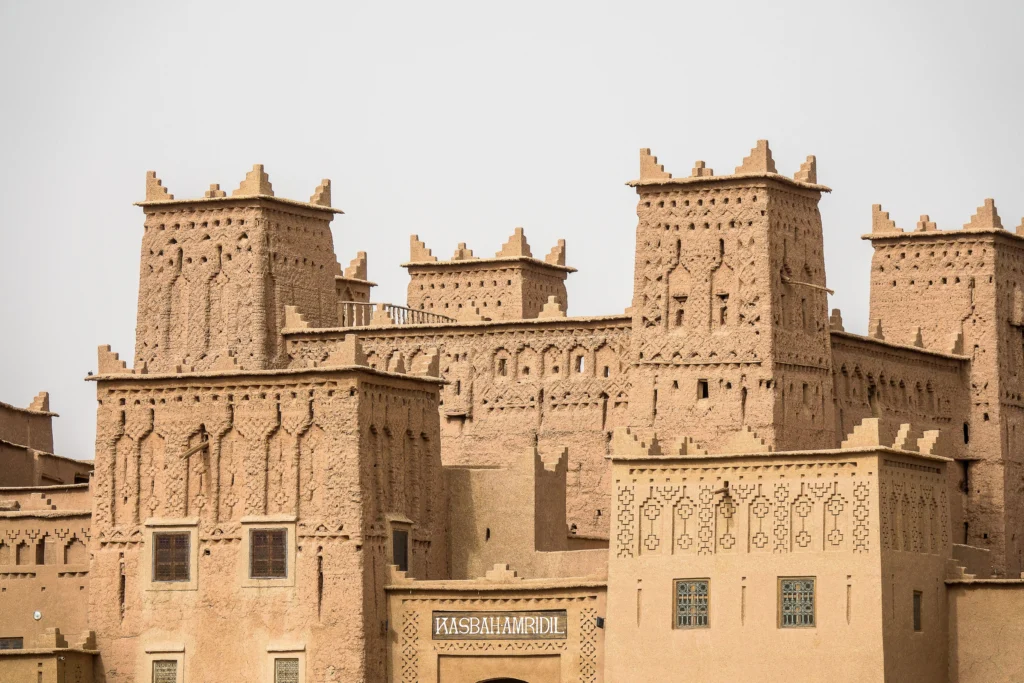
A Classic Kasbah Among Palm Groves
Kasbah Amridil is located in the Skoura oasis, east of Ouarzazate.
It is one of the most famous examples of Moroccan kasbah architecture and is especially memorable because its decorated towers rise among the palm groves.
Current visitor sources place admission at roughly 30–40 MAD, generally paid in cash, although prices can vary and should be confirmed locally.
Approximate entrance: 30–40 MAD
Suggested visit: 45–90 minutes
The interior provides more than an exterior photo opportunity. Visitors can see spaces associated with everyday life, storage, domestic activities, and the traditional organization of the building.
Skoura itself is also important as an oasis landscape. This makes Amridil a particularly good stop on a longer Ouarzazate, Dades and Sahara itinerary.
4. Kasbah Telouet
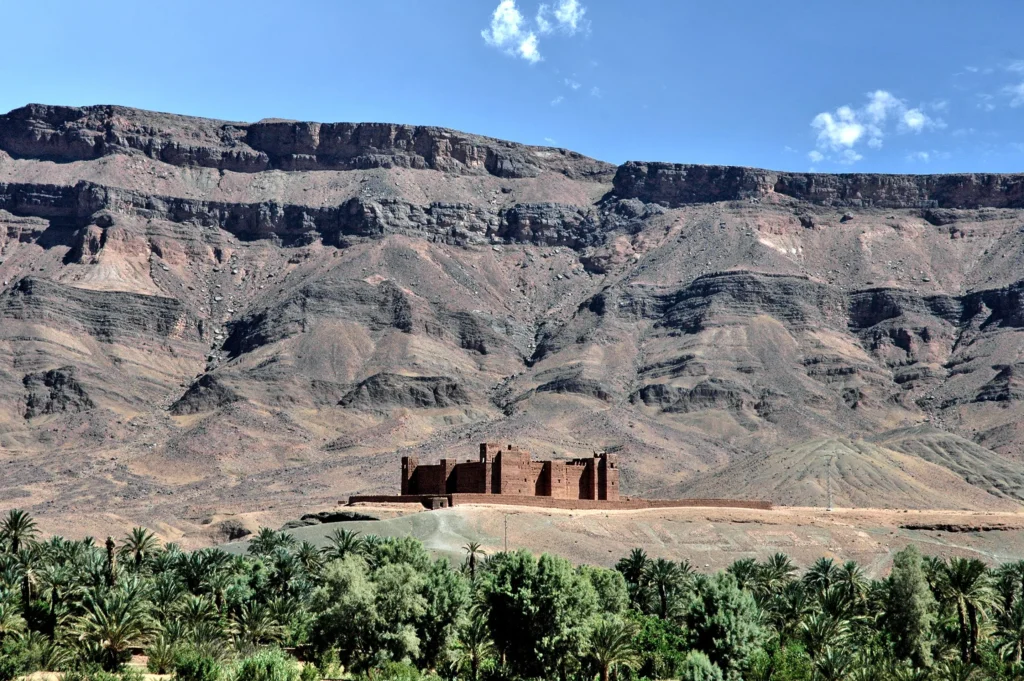
The High Atlas Glaoui Palace
Kasbah Telouet is different from the more familiar desert-road kasbahs because it lies in a mountain setting.
The site was associated with the Glaoui family and is partly ruined, but some interior spaces still contain elaborate decoration.
Visitors may encounter zellige, carved stucco, painted cedar, and other signs of the craftsmanship that once decorated the palace.
The current entrance pricing reported by visitor sources varies considerably, with figures ranging from roughly 20 to 50 MAD. Another 2026 guide lists around 50 MAD, so travelers should confirm the current amount at the site.
Approximate entrance: 20–50 MAD
Suggested visit: 45–90 minutes
Telouet is especially interesting for travelers who want to explore beyond the standard Marrakech–Ouarzazate route.
5. Kasbah Tamnougalt
Explore the Draa Valley’s Fortified Heritage
Located near Agdz in the Draa Valley, Tamnougalt offers another fascinating perspective on southern Moroccan architecture.
The site is associated with the Mezguita area and retains fortified earth construction, narrow passages, towers, and sections of historic settlement.
Current visitor information lists an entrance fee around 20 MAD, with some local experiences combining the visit with a guide.
Approximate entrance: 20 MAD
Suggested visit: 40–90 minutes
Tamnougalt works especially well for travelers following the Draa Valley toward Zagora.
Morocco Kasbah Entrance Fees: 2026 Guide
Because many kasbahs are locally operated rather than managed like large national museums, entrance prices can vary.
Use the following figures as approximate 2026 planning prices, not fixed nationwide tariffs.
| Kasbah / Ksar | Location | Approx. Entrance |
|---|---|---|
| Aït Ben-Haddou | Ouarzazate Province | Free public access; optional sites ~10–20 MAD |
| Taourirt | Ouarzazate | ~20 MAD |
| Amridil | Skoura | ~30–40 MAD |
| Telouet | High Atlas | ~20–50 MAD |
| Tamnougalt | Draa Valley | ~20 MAD |
Current sources report different prices for several sites, particularly Aït Ben-Haddou and Telouet, which is why visitors should ask what the fee includes before paying.
Why Do Kasbah Fees Vary?
There is no single “Morocco Kasbah Pass.”
Each attraction can have different management arrangements. Some charge for a museum or restored interior, while others may involve local guides, family-run houses, or caretaker fees.
For that reason, online lists can become outdated quickly.
Are Kasbah Tours Worth It?
A kasbah tour can be a very useful way to explore southern Morocco, especially when several historic sites are located along the same route.
Instead of organizing separate taxis for each monument, a private or small-group desert tour can combine sightseeing with transportation.
For example, a route from Marrakech toward the Sahara can include:
Marrakech
Begin in the Red City and cross the High Atlas.
Aït Ben-Haddou
Explore the UNESCO-listed ksar and surrounding landscape.
Ouarzazate
Visit Taourirt and, depending on the itinerary, explore the city’s film heritage.
Skoura
Discover Amridil and the palm oasis.
Dades Valley
Continue through landscapes filled with cliffs, valleys, villages, and earthen architecture.
Todra Valley and Gorge
Explore another dramatic part of southeastern Morocco.
Merzouga
Finish among the dunes of Erg Chebbi for a Sahara experience.
Morocco’s National Tourist Office specifically promotes organized journeys along the Road of the Kasbahs using guides and 4×4 or other touring options, with routes through Ouarzazate, Zagora, Tinghir, Dades, and the Draa Valley.
Best Morocco Desert Tours for Kasbah Lovers
Marrakech to Merzouga Desert Tours
This is one of the most popular ways to combine kasbah sightseeing with the Sahara.
The journey allows travelers to see how the architecture changes from the Atlas Mountains to the valleys and desert-edge communities.
A multi-day tour is generally more suitable than a rushed day trip because the distances are substantial and there are many places worth stopping along the route.
Fes to Merzouga Desert Tours
Travelers beginning in Fes can head toward the Middle Atlas before crossing into southeastern Morocco.
This route provides a strong contrast between Morocco’s historic imperial-city architecture and the earthen architecture of the desert regions.
A Fes to Merzouga desert tour can be especially attractive for travelers who want to combine cultural sightseeing with a Sahara camp experience.
Ouarzazate and Draa Valley Tours
For travelers primarily interested in kasbah architecture, an itinerary around Ouarzazate, Skoura, Agdz, and the Draa Valley allows more time at each historic site.
It can also be combined with the desert landscapes of Zagora or further Sahara travel.
What Should You Look for Inside a Kasbah?
Decorative Earthwork
Look carefully at the upper sections of towers and walls.
Traditional geometric designs can be subtle from a distance but become much easier to appreciate when viewed up close.
Courtyards
Courtyards helped organize domestic life and provided light and air inside otherwise enclosed structures.
Storage Rooms
Large buildings needed places to store grain, food, tools, and other supplies.
Towers
Corner towers are among the most recognizable architectural features of southern Morocco.
Painted Ceilings and Zellige
Some wealthy historic residences contain interiors decorated with carved wood, painted ceilings, stucco, and zellige tilework.
These details show the connection between southern Morocco’s earthen architecture and the sophisticated decorative traditions found in cities such as Fes and Marrakech.
Tips for Visiting Moroccan Kasbahs
Carry Cash
Small kasbahs and rural attractions may not accept cards. Carry Moroccan dirhams in small denominations.
Ask Before Paying
At sites with privately managed rooms or local guides, ask what the payment covers.
This is particularly important at Aït Ben-Haddou, where public access and optional paid spaces can be confused online.
Visit Early or Late
Early morning and late afternoon are usually more comfortable for walking and photography than the strongest midday sun.
Wear Good Shoes
Earthen paths, stairs, slopes, and uneven surfaces are common.
Protect the Walls
Traditional pisé is durable when maintained but vulnerable to water, erosion, and physical damage.
Avoid leaning against fragile walls or climbing areas that are not open to visitors.
Respect Local Residents
Not every earthen building is an abandoned monument.
Some historic settlements remain inhabited. Ask permission before entering private spaces or photographing residents.
What Is the Best Time to See Kasbahs in Morocco?
The best period depends on the route and your tolerance for heat.
Spring and autumn are particularly comfortable for many travelers combining Marrakech, Ouarzazate, the valleys, and the Sahara.
Winter can provide pleasant daytime conditions in the desert, but mountain areas can be cold, especially around High Atlas passes.
Summer requires greater attention to heat management. Early starts, water, sun protection, and regular breaks become more important.
For a desert itinerary, remember that temperatures can change sharply between daytime and nighttime.
Kasbahs and Moroccan Film Tourism
Moroccan kasbahs have also become closely associated with international cinema.
Their dramatic walls, towers, valleys, and desert surroundings make natural filming locations.
The National Tourist Office itself notes that kasbah architecture has become an important part of Morocco’s film-making identity.
This is particularly noticeable around Ouarzazate and Aït Ben-Haddou, where travelers can combine architectural sightseeing with film-related attractions.
For movie enthusiasts, adding a film studio visit to a kasbah itinerary can make the Ouarzazate portion of a trip even more interesting.
Kasbahs, Oases and the Sahara
One of the most rewarding aspects of visiting Moroccan kasbahs is understanding their relationship with the surrounding landscape.
A kasbah was never simply a decorative building placed in the desert.
The architecture developed within an ecosystem of:
Water → Oasis → Agriculture → Trade → Settlement → Fortification
Palm groves provided food and shade. Water supported agriculture. Caravan routes connected distant regions. Settlements developed around these resources, and fortified structures offered protection and social organization.
That relationship remains visible today in places such as Skoura and the Draa Valley, where palm oases surround historic earthen architecture.
This is also why kasbah visits fit naturally into a Morocco desert tour.
How Many Kasbahs Should You Visit?
There is no need to collect as many sites as possible.
One or two well-explored kasbahs can provide more understanding than five rushed photo stops.
For a first Morocco trip, Aït Ben-Haddou and Taourirt make a convenient combination around Ouarzazate.
For travelers with more time, adding Amridil, Telouet, or Tamnougalt creates a broader picture of regional architectural styles.
For architecture enthusiasts and photographers, a longer itinerary along the Road of the Kasbahs offers opportunities to discover smaller and less-visited structures in addition to famous monuments. Morocco’s tourism office specifically presents this region as a route rich in traditional citadels, palm groves, valleys, and local communities.
Frequently Asked Questions About Moroccan Kasbahs
What is a kasbah in Morocco?
A kasbah is a traditional fortified residence, stronghold, or citadel, particularly common in southern Morocco. They were built using materials such as earth, clay, and straw and could include towers, courtyards, living areas, and defensive walls.
What is the difference between a kasbah and a ksar?
A kasbah generally refers to a fortified residence or stronghold, while a ksar is a fortified settlement containing multiple houses and communal structures. UNESCO identifies Aït-Ben-Haddou as a ksar rather than a kasbah.
Is Aït Ben-Haddou free to visit?
Current visitor information indicates that public access to the main ksar can be free, while individual traditional houses, small museums, or private exhibition spaces may charge separate fees.
How much does Kasbah Taourirt cost?
Current 2026 visitor sources commonly report around 20 MAD, although travelers should confirm the current price locally.
How much is Kasbah Amridil?
Current local visitor information generally reports around 30–40 MAD for admission. Cash is advisable, and prices or opening arrangements can change.
Can I visit kasbahs on a Morocco desert tour?
Yes. Many desert itineraries include historic kasbahs, especially around Ouarzazate, Skoura, the Draa Valley, and Aït Ben-Haddou. The Moroccan National Tourist Office promotes organized routes specifically focused on the Kasbah Road.
Final Thoughts: Discover the Kasbahs of Morocco
So, what is a kasbah?
A kasbah is much more than an old fortress made from mud. It represents a traditional way of building and living that developed around Morocco’s valleys, oases, caravan routes, mountains, and desert landscapes.
The architecture is practical, but it is also highly artistic. Thick earthen walls provided protection and helped manage heat, while towers, geometric decoration, courtyards, carved doors, and painted interiors reflected the skill and status of the people who lived there.
A visit to Aït Ben-Haddou, Taourirt, Amridil, Telouet, or Tamnougalt reveals a different part of this story.
For travelers planning a Morocco desert tour, these historic sites can make the journey to the Sahara much more meaningful. Instead of simply crossing southern Morocco to reach the dunes, you can understand the communities, architecture, trade routes, and landscapes that shaped the region.
At Top Morocco Desert Tours, kasbahs can be incorporated naturally into journeys between Marrakech, Ouarzazate, Skoura, the Dades Valley, Zagora, Merzouga, and other destinations across Morocco.
Whether you are interested in architecture, history, photography, local culture, or simply want to see the spectacular landscapes of southern Morocco, the country’s kasbahs offer a remarkable way to experience the road beyond the major cities.
Morocco kasbahs, famous kasbahs in Morocco, kasbah meaning, what is a kasbah in Morocco, Kasbah Ait Ben Haddou, Kasbah Amridil, Kasbah Taourirt, Kasbah Telouet, Kasbah Tamnougalt, Morocco kasbah tours, desert tours Morocco, kasbah architecture, Morocco Sahara tours